Congress report · Vision & ethics
The futures of AI in psychiatry: report from the DGPPN 2026 panel
What the most important psychiatry congress in the German-speaking world discussed about ethics, data, regulation and the future of our profession.

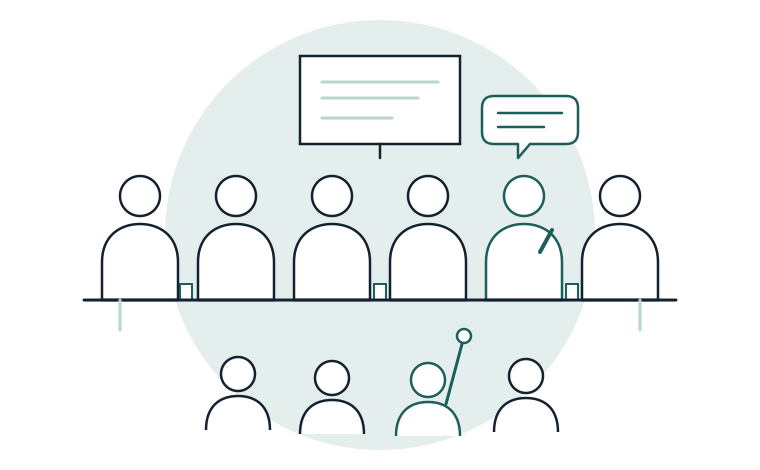
Anyone who wanted to know where German-speaking psychiatry stands on artificial intelligence right now was in the right place at the DGPPN Congress 2026, in the panel “The futures of AI in psychiatry: between clinical progress, ethics, data protection and power”. A medical ethicist, an AI ethicist, a precision psychiatrist and a data law scholar shared one stage. And they by no means always agreed.
For me it was the highlight of the congress. The room was full, mostly with psychiatrists and psychotherapists from clinical care. Their reactions often said more about the mood in our profession than the statements from the stage. This report is for everyone who could not be there: what was said, where there was friction, and which questions remained open. At the end, I add my own look at the evidence on digital therapies that was presented at the same congress.
Who was on the panel
- Prof. Dr. Alena Buyx, Professor of Ethics in Medicine and Health Technologies at the Technical University of Munich and former chair of the German Ethics Council.
- Prof. Dr. Rainer Mühlhoff, Professor of Ethics and Critical Theories of Artificial Intelligence at the University of Osnabrück.
- Prof. Dr. Nikolaos Koutsouleris, Professor of Precision Psychiatry at LMU Munich and King’s College London.
- Prof. Dr. Louisa Specht-Riemenschneider, legal scholar in information and data law, and German Federal Commissioner for Data Protection and Freedom of Information (BfDI) until the end of September 2026.
Alena Buyx: three principles that also apply to psychiatry
Alena Buyx opened with three principles for AI in medicine. They earned the loudest applause of the evening.
1. Anyone who uses an AI tool must know what it can and cannot do. Her example was a now well-known case report in Annals of Internal Medicine: Clinical Cases1. A 60-year-old man wanted to cut down on table salt and asked ChatGPT for alternatives. He then replaced sodium chloride with sodium bromide for months and came to the emergency department with psychosis due to bromism. A syndrome we know mainly from nineteenth-century textbooks came back through a chatbot.
2. AI makes different mistakes than humans. Even the most exhausted resident on a night shift, Buyx said, would not make a mistake that contradicts all clinical logic. A language model can, when it lacks context. And it does so without any sense of responsibility: we do not even matter to these systems. They have no consciousness and no concern for us, so they feel no guilt after giving absurd advice.
3. Do not use AI to fill gaps we do not want filled this way. If AI-based psychotherapy is worse than human therapy, we must not replace the better with the worse. Nobody should be pushed into a digital treatment they do not want when a human alternative is available. AI belongs where it truly makes sense.
This struck a nerve in the room. Many of the clinicians present experience AI mainly as a promise imposed on them from outside. Buyx put into words what many were evidently thinking:
People want to be treated by people.
Rainer Mühlhoff: dual use and the end of naive open science
Rainer Mühlhoff turned to a risk that clinical research rarely considers: secondary use. A model that detects depression from the voice is a screening tool for a clinic. For an HR department, it is a filter in job interviews. For an insurer, it is a way to screen out people who might later need psychiatric care. According to Mühlhoff, this is already happening today.
His second point challenged an ideal held by many researchers. Until now, sharing data openly meant enabling replication and being a good scientist. In the age of AI, Mühlhoff sees open data as a threat, because anyone can do anything with it. Instead, he proposed licensing models with purpose limitation. Every derived purpose should remain bound to the original one, so the purpose limitation is “inherited”. The classic tie to the origin of the data is no longer enough, he argued.
Others on the panel pointed out that medical research has long had such frameworks, for example the Declaration of Helsinki. The problem is less a lack of rules than their implementation. Many researchers who build prediction models are simply unaware of the dual-use risks. One answer that was offered: embedded ethics, meaning ethics advice that sits in the team during development rather than giving a verdict at the end.
Data: we measure too little and validate even less
Nikolaos Koutsouleris brought a figure that stuck: only about 5% of medical prediction models are externally validated. Most of the time, then, we do not know how well a model works outside the setting where it was developed. Models perform differently from one setting to another. This fits the call for a model card alongside every model, a kind of package leaflet: in which people, in which setting and with what accuracy does it work?
Koutsouleris sees a basic problem of psychiatry behind this. Good models need good data, and we hardly collect any. According to his figures, only around 10% of clinicians in Germany use measurement-based care, that is, systematically measuring symptoms over time. The rest rely on clinical impression. Large amounts of valuable data are lost, and psychiatry lags behind other specialties.
The benefit starts long before any AI, he stressed. Being able to see at a glance on your ward how your patients are doing over time is already an enormous gain. AI comes on top of that.
The question of power remains open: where will these data be pooled? Louisa Specht-Riemenschneider argued for public infrastructure. Germany already has a secure processing environment, the Health Research Data Centre (FDZ Gesundheit), where researchers can apply for data access. According to her, private secure processing environments should also become possible from around 2027 to 2029. A shared environment would be interesting for university hospitals, for example through Germany’s Network University Medicine.
Regulation: world champions at making rules, laggards at enforcing them?
The sharpest diagnosis on regulation came from Louisa Specht-Riemenschneider: much of what is being called for is already regulated. What is missing is enforcement. Law that cannot be enforced is law we do not need. Instead of ever more rules, we need a phase of consolidation. That also means repealing rules that cannot be enforced. And we need a clear answer to the question of where we actually want to go.
She also named the tension openly. Europe risks becoming the world champion of regulation while innovation passes us by. The Digital Omnibus proposed by the European Commission will not solve this problem, she said.
Other voices on the panel added an international comparison. In the US, individual harm is more readily accepted in technology development: people wait until harm occurs, pay compensation and only then adjust the safety measures. The risk profile thus emerges only from harms that have actually happened. What the panel wanted instead was regulation that learns and adapts while also looking ahead. Finland and Denmark were named as countries with interesting approaches to where and how research may be done.
Alena Buyx brought in the reality of patient care. Clinical trials for medical devices take a long time, while hospitals have a duty to provide care now. For the short term, she made a clear call:
- Build our own tools for medicine instead of becoming dependent on American and Chinese hyperscalers.
- Strengthen European developers on the basis of trust: we trust you to follow our rules, and we make the path easier for you.
- Real sanctions against ChatGPT and similar American providers when their products cause harm.
The goal: tools that clinicians can use with a clear conscience.
Are we sawing off the branch we sit on?
The most heated part of the evening began with a question Rainer Mühlhoff put to the profession itself: are we psychiatrists not sawing off the branch we are sitting on when we build such models?
Alena Buyx disagreed firmly, with two arguments. First, nobody, if they are honest with themselves, wants to be cared for only by chatbots and robots. How would I want to be treated myself? In a clinic full of perfectly functioning AI models, or in one where people work? Second, psychotherapy without human presence cannot be equally effective.
Buyx went further: the peak of what this technology can bring us has already passed. We are in a phase of disenchantment. Someone on the panel also said that a comparison between human and artificial intelligence is not really meaningful.
Towards the end, Nikolaos Koutsouleris offered the counterpoint. In child and adolescent psychiatry, waiting times can reach twelve months. In that time, a patient can take their own life. It would be better if an AI alerted us to who needs to be seen urgently, so that we can reach these people in time. That is clearly a sensible use of AI.
The question left hanging in the room was whether we are heading towards a transformation in which only an elite receives therapy from a person and everyone else gets an app.
The question from the audience: can the course of a mental illness be predicted at all?
A comment from the audience took the discussion to a more fundamental level. Do we philosophically believe that the course of a mental illness can be predicted with measurements and a prediction model? And are we not forgetting the role of the patient’s free choice?
The question was deeply philosophical. It touched on something that we, as practising psychiatrists, have long known intuitively.
It targets a silent assumption behind many prediction projects: that a disorder has a “natural trajectory” that only needs to be detected early enough. But psychiatry is not a fully causal, determined field. People reflect on themselves and decide to act differently. Beside the factual, there is the space of the possible. The discussion warned against following an ideology of prediction in research, as if everything were already fixed.
The implications go far beyond philosophy:
- Health system: If we regard the course of illness as determined, the principle of solidarity comes under pressure. In Germany, the ban on fine-grained risk profiles in statutory health insurance protects against exactly this increasingly deterministic view of people.
- Communication: The accuracy of a prediction is often not communicated. A risk score then reads like a verdict.
- Self-fulfilling prophecy: Predictions do not only describe social differences, they can create them. Someone labelled “high risk” is treated differently and may develop as predicted precisely because of that.
For our profession, this is not an academic question. Our treatments assume that change is possible. A model that calculates a patient’s future for them can undermine that assumption.
My comment: is human therapy really unmatched?
I share Alena Buyx’s basic position that nobody should be pushed into a worse treatment. After the talks on digital therapies at this congress, I wanted to take a closer look at her second claim, that psychotherapy without human presence is not equally effective. The result: it holds.
Purely digital therapies work, but less well. Apps and internet programmes without human guidance reach effect sizes of roughly 0.3 to 0.5 for depression, depending on the meta-analysis: g = 0.34 for purely digital self-help2, g = 0.28 for apps3, g = 0.45 for unguided CBT self-help4 and g = 0.50 for apps in moderate to severe depression5. In direct comparison, unguided self-help is somewhat less effective than CBT delivered by people6.
The AI chatbot also falls short of humans when compared fairly. Therabot, a generative therapy chatbot from Dartmouth, was tested in 2025 in NEJM AI with 210 adults with clinically relevant symptoms7. The control group was a waiting list. The only fair comparison is therefore with human psychotherapy that was also tested against a waiting list:
| Depression, each against waiting list | Effect size | Source |
|---|---|---|
| Human CBT in adults | g > 0.94 | Cuijpers et al. 20258 |
| Therabot, after 4 and 8 weeks | d ≈ 0.58 and 0.62 | my own calculation from the published means and standard deviations in Heinz et al. 20257 |
The authors themselves report d = 0.85–0.90 for Therabot. That value, however, is calculated from the log odds ratio and is therefore not directly comparable with the meta-analyses.
Across all control conditions, CBT for depression reaches g = 0.79, and g = 0.60 in studies with a low risk of bias, across 409 studies with 52,702 patients4.
Under equal conditions, then, humans are still more effective. The gap is not huge, though, especially since Therabot was used for only four weeks.
This brings me to a thought experiment. What happens if one day we can offer fully immersive psychotherapy through a VR headset? With music, images, a personalised voice, a personalised therapist figure and an individually tailored programme. Will human therapy still be the better option then? I do not know.
As a clinician and practitioner, my intuition tells me that the therapist’s physical presence is an important active ingredient. But I do not know where its replicability ends. Is it the human form, the heartbeat, the warmth, the shared moment? And how far can it be reproduced?
We know from our therapies that feelings in a session do not only show in words, facial expressions and gestures. They also happen in the body, and we feel them ourselves.
Conclusion: the mood in our profession
Taking the reactions in the room seriously, I see a profession that does not reject AI but distrusts it wherever it is meant to replace people. The loudest applause went to the sentence that people want to be treated by people. The question from the audience about whether the course of mental illness can be predicted at all went deepest philosophically.
At the same time, the consensus on the basics was remarkably broad. We need better data, which means more measurement-based care. We need externally validated models with clear instructions for use. We need public data infrastructure, purpose limitation against misuse, and regulation that is actually enforced. And we need European tools that we can trust.
The question of our own role remains unresolved. If waiting times stay as long as they are, care will not wait for us. Whether AI then widens or narrows the gap between people treated in person and people cared for digitally will also depend on whether we psychiatrists help shape these tools.
One thing was clear to everyone in the room at the end: there was not nearly enough time. When the panel had to close, many questions were still open. The discussion could easily have gone on for another two hours, and that may be the clearest sign of how much this topic occupies our profession right now.
References
- Eichenberger A, Thielke S, Van Buskirk A. A case of bromism influenced by use of artificial intelligence. Ann Intern Med Clin Cases. 2025;4:e241260.
- Moshe I, Terhorst Y, Philippi P, et al. Digital interventions for the treatment of depression: a meta-analytic review. Psychol Bull. 2021;147(8):749–786. doi:10.1037/bul0000334 · DOI
- Linardon J, et al. Current evidence on the efficacy of mental health smartphone apps for symptoms of depression and anxiety: a meta-analysis of 176 randomized controlled trials. World Psychiatry. 2024;23(1):139–149 (includes the 2019 estimate by Linardon et al.) · PMC
- Cuijpers P, Miguel C, Harrer M, Plessen CY, Ciharova M, Ebert D, Karyotaki E. Cognitive behavior therapy vs. control conditions, other psychotherapies, pharmacotherapies and combined treatment for depression: a comprehensive meta-analysis including 409 trials with 52,702 patients. World Psychiatry. 2023;22(1):105–115. doi:10.1002/wps.21069 · PubMed
- Bae H, Shin H, et al. App-based interventions for moderate to severe depression: a systematic review and meta-analysis. JAMA Netw Open. 2023;6(11):e2344120. doi:10.1001/jamanetworkopen.2023.44120 · PMC
- Cuijpers P, Noma H, Karyotaki E, Cipriani A, Furukawa TA. Effectiveness and acceptability of cognitive behavior therapy delivery formats in adults with depression: a network meta-analysis. JAMA Psychiatry. 2019;76(7):700–707. doi:10.1001/jamapsychiatry.2019.0268 · PubMed
- Heinz MV, Mackin DM, Trudeau BM, et al. Randomized trial of a generative AI chatbot for mental health treatment. NEJM AI. 2025;2(4). doi:10.1056/AIoa2400802 · DOI
- Cuijpers P, Harrer M, Miguel C, et al. Cognitive behavior therapy for mental disorders in adults: a unified series of meta-analyses. JAMA Psychiatry. 2025;82(6):563–571. doi:10.1001/jamapsychiatry.2025.0482 · JAMA Psychiatry